

The Moment Casino Onboarding Logic Landed on My Cake Forum Dashboard
Running a dedicated cake forum is a labor of love that comes with a surprisingly demanding operational side. When I first built the community backbone of TheKingCake, I envisioned a lively digital space where passionate bakers could swap buttercream ratios, rescue sunken sponge layers, and celebrate each other's milestone creations. What I never anticipated was finding one of my most transformative management frameworks in a completely unrelated industry. This is the story of how the principles embedded in uvítací bonus kasino systems changed the way I structure our online baking community — and why those principles apply far more broadly than you might expect.
Our cake forum had been running for just over two years when engagement began hitting a wall. New member introductions slowed to a trickle. The question-and-answer threads that once filled the front page gave way to stretches of silence. I tried the standard fixes: themed weeks, ingredient spotlights, community giveaways. Nothing created lasting momentum. Then, while researching gamification strategies for hobby communities, I encountered a detailed breakdown of how welcome bonus systems in online casinos are architected to create immediate value for newcomers while encouraging repeated, sustained participation. The structural parallels to what I was trying to accomplish in a baking community were impossible to ignore.

I want to establish one thing clearly before continuing: this article is not about gambling. It is about behavioral design — the science of making people feel welcomed, seen, and motivated to come back. The online gaming industry has invested enormous resources into studying exactly those feelings, and most of the resulting frameworks transfer cleanly into hobby communities that struggle with member retention. The insight is the mechanism, not the medium.
Understanding Why Welcome Bonus Structures Work So Well
The Three Pillars Behind Effective Onboarding Systems
At their core, well-designed welcome bonuses solve a specific problem: they give newcomers an immediate, tangible reason to engage rather than observe from the margins and drift away. The psychological trigger relies on three consistent pillars. First, an onboarding reward that activates the moment a new participant takes their first action. Second, a progressive milestone system that rewards sustained engagement and makes each subsequent action feel like it builds toward something meaningful. Third, transparent rules that let participants understand exactly what they are working toward and why it matters. If you want to read a detailed breakdown of how incremental reward systems are structured to maximize return behavior, you can learn more about them here. The important takeaway for a community manager is not the specific reward type but the underlying architecture: every effective welcome system reduces friction, delivers immediate value, and creates a visible path forward.
The Gap That Most Cake Forums Share
When I audited our forum honestly, I found every classic failure point. New members registered, posted a single tentative introduction, received one or two polite replies from regulars, and then vanished entirely. There was no structured onboarding path. There was no immediate reward signal for their first action. There was no visible progression system to show them what to do next or what participating consistently might earn them. We were, in effect, operating like an establishment that extended no welcome at all and then wondered why guests did not linger.
The data confirmed what I already suspected. In the six months before I restructured the forum, our 30-day new member retention rate was just 11 percent. Nearly nine out of every ten people who took the time to create an account never returned after their initial visit. For a community built around shared passion for baking, that number was both devastating and, as it turned out, entirely fixable.
The Numbers: A Before-and-After Comparison of Real Forum Metrics
Before walking through the specific changes I implemented, here is an honest summary of the key engagement metrics measured across comparable six-month windows before and after the restructure. All data comes from our forum analytics platform and tracks registered members only, not casual visitors.
| Metric | Before Restructure | After Restructure | Change |
|---|---|---|---|
| 30-Day New Member Retention | 11% | 34% | +23 percentage points |
| Avg. Posts Per New Member (Month 1) | 1.8 | 6.4 | +256% |
| Monthly Active Members | 214 | 511 | +139% |
| Weekly New Thread Creations | 8 | 31 | +288% |
| Average Session Duration (Minutes) | 4.2 | 11.7 | +179% |
| Member Satisfaction Score (out of 10) | 6.1 | 8.6 | +2.5 points |
These results did not come from an advertising campaign or a viral post. They came from fundamentally redesigning the new member experience using principles borrowed from onboarding systems I had studied closely. The full monthly tracking documentation and methodology notes are available https://czkasino.cz/ for anyone who wants to examine the numbers in greater detail.

The Step-by-Step Implementation: Translating Bonus Mechanics Into Baker Culture
Adapting the welcome bonus architecture to a baking community required genuine creative translation. These mechanics are tuned for environments where interactions are fast and low-stakes, and the same principles had to be applied in a way that felt authentic to a hobby community where relationships form slowly around shared craft. Here is the exact sequence of changes I rolled out, in implementation order.
- Redesigned the Welcome Thread Template: Instead of an open-ended "introduce yourself" prompt, I created a structured template that asked new members to name their baking experience level, identify one technique they wanted to master, and share one they already felt confident in. Existing members immediately had specific, relevant reasons to respond with targeted advice.
- Launched the First Bake Badge: Every new member who posted within their first 48 hours received a visible "First Bake" badge on their profile. This is the direct analogue of the immediate onboarding reward — it costs nothing to implement and delivers a clear, public signal of recognition at exactly the right moment.
- Created a Visible Member Progression Track: I built a five-level tier system — Apprentice Baker, Journeyman, Pastry Enthusiast, Confection Expert, and Master Cake Artist — with transparent criteria for each level. Members could see exactly how many posts, recipe contributions, and peer-rated tips they needed to advance, removing all ambiguity from the participation path.
- Introduced Monthly Milestone Spotlights: Members who hit engagement milestones each month were featured in a dedicated "Baker of the Month" post with links to their best contributions. Peer recognition consistently proved to be more motivating than any material prize we had previously offered.
- Built a First Week Mentor Program: Every new member was automatically matched with a volunteer mentor — an experienced community member who agreed to answer questions during the newcomer's first seven days. This structural support eliminated the most common dropout pattern: posting once, receiving no meaningful response, and quietly leaving.
- Simplified the Forum Architecture: I reduced our subforum categories from twenty-two channels down to six clearly labeled discussion areas. Lower initial friction correlates directly with higher return rates — this is one of the most consistently validated findings across onboarding research in any domain.
- Published a Transparent Community Roadmap: Members could now see planned features, upcoming contests, and community events for the next three months. This created continuity and gave people a reason to stay engaged because something interesting was always on the horizon.
The consistency of principle across seemingly unrelated industries is remarkable once you start looking for it carefully. If you are already working to boost forum activity, many of these steps require no technical platform changes and can be implemented immediately with existing tools.
The Real Pitfalls — And How to Navigate Them
Any account that only lists successes is not a genuinely useful resource. The restructure took four months to fully implement and produced several significant challenges along the way. Here is an honest breakdown of what went wrong and how we corrected each issue.
- Mentor burnout: The First Week Mentor program was our most effective initiative and the one closest to collapse within two months. We had more new members than available mentors, and several volunteers reported feeling overwhelmed. The fix was capping each mentor at three active newcomers simultaneously and introducing a rotating volunteer schedule.
- Badge inflation: When every small action triggers a badge, badges rapidly lose meaning. Our original twelve badge types were pruned to five that represented genuinely meaningful milestones. Less is reliably more when designing recognition systems.
- Category creep: Within six weeks of simplifying our channel structure, members began requesting new specialized subforums. We held firm on the six-channel limit and introduced a weekly megathread format to absorb niche topics without fragmenting the community again.
- Mismatched mentor pairings: Pairing a decorated wedding cake specialist with a newcomer interested exclusively in no-bake desserts created friction rather than connection. A simple interest-matching field added to the registration process dramatically improved pairing quality.
- Roadmap over-disclosure: Publishing too many details about features that were still uncertain backfired when timelines changed. We shifted to publishing roadmap items only when we were at least 80 percent confident in delivery, and member trust recovered quickly.
Every one of these was a manageable problem, and working through them made the community demonstrably more resilient. The practical quick tactics for moderators that we relied on during the transition kept daily activity stable while the larger structural changes were still taking shape.
Scaling the Framework: Small Forums, Large Forums, and Everything Between
Adapting the Model When You Have Under 500 Members
At early growth stages, the most impactful single change is combining the welcome thread redesign with the immediate First Bake Badge. Both require zero technical changes and address the most critical problem small forums face: new members not knowing what to do or whether anyone will respond if they try. At under 500 members, the intimacy of the community is actually a structural advantage. That warmth should be actively channeled rather than obscured behind elaborate tier systems that feel premature. Even one or two established members agreeing informally to check new introductions within 24 hours is enough to demonstrate that the community is alive and paying attention.
Scaling the Framework for Communities Beyond 5,000 Members
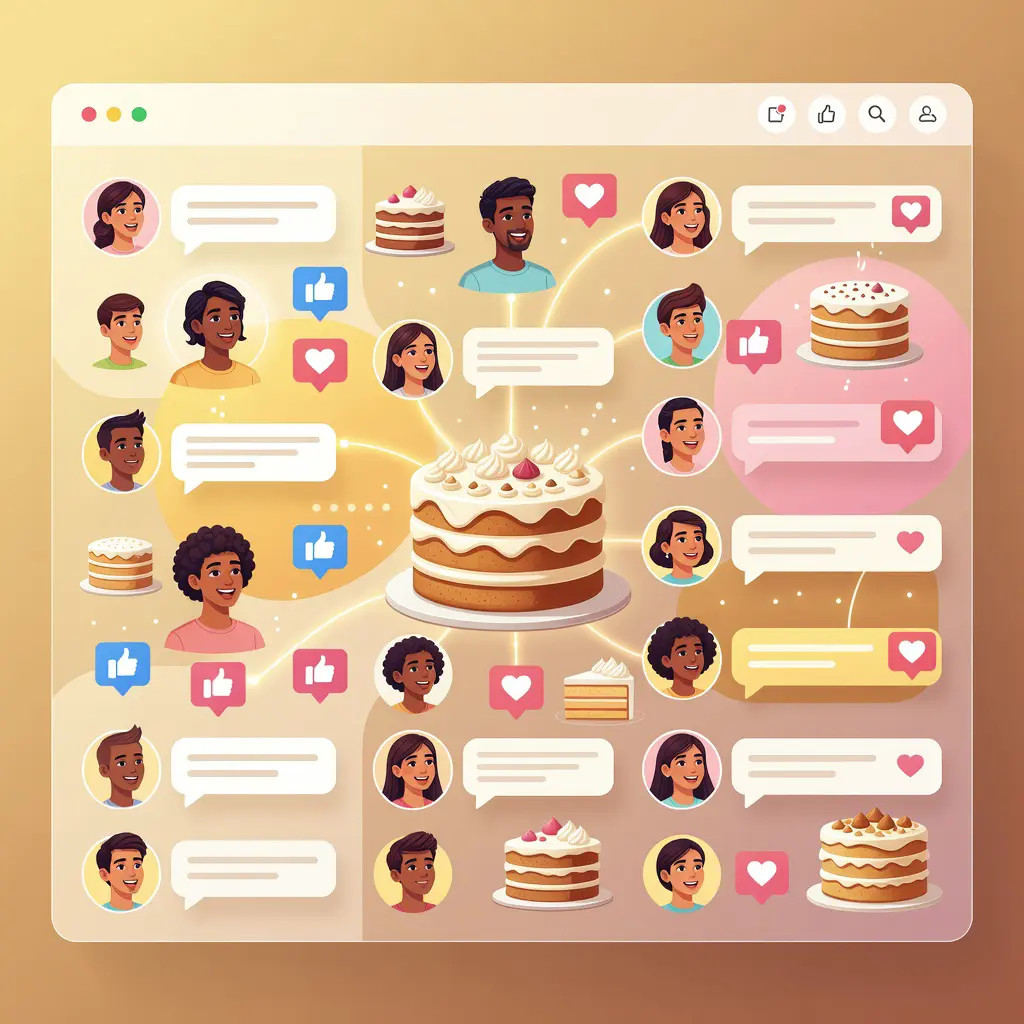
At larger scales, the challenge shifts from invisibility to impersonality. Large forums frequently develop a silent majority problem where most registered members never post because the community already feels too established to break into comfortably. The onboarding parallel here becomes more sophisticated: effective large-scale systems do not treat every participant identically. They segment their audience and calibrate the engagement experience to match different behavioral profiles. You should do the same. Identify at least three cohorts — lurkers who read but rarely post, occasional contributors who participate a few times monthly, and active community builders who post frequently and help others — and design different engagement nudges for each group rather than broadcasting the same content universally.
Lurkers need lower-friction entry points: a single-click reaction system, an anonymous question feature, or a curated "best of the week" digest that surfaces content without requiring any action at all. Occasional contributors benefit most from recognition and slightly more challenging creative prompts that give them something interesting to react to. Active community builders need genuine leadership opportunities — the ability to host official sub-events, moderate themed weeks, or contribute to the community roadmap. Treating these three groups as a single undifferentiated audience is one of the most common and costly mistakes large forum managers make.
The Philosophy Behind the Numbers: Treating Members as Valued Guests
The deepest lesson I took from studying welcome bonus design is philosophical before it is tactical. The best onboarding systems in any context — whether a casino welcome package, a hotel loyalty program, or a cake community forum — are built on a foundational assumption: the newcomer's time is genuinely valuable, their first impression is permanent, and the cost of losing them in the first ten minutes is far higher than any investment made to retain them. Most hobby forums, including ours before the restructure, operate on the opposite implicit assumption: if someone cared enough to register, they will figure it out on their own.
That assumption is empirically wrong, and retention numbers across online communities consistently prove it. People join forums because of a momentary spark of need or curiosity — a birthday cake emergency, a failed fondant attempt, a sudden desire to learn Italian meringue buttercream. If the community fails to meet them in that moment, they leave and almost never return. The onboarding experience is not an administrative formality or a secondary feature. It is the first and most important content experience you will ever provide to any member.
When I stopped treating new member onboarding as a checkbox and started designing it as the highest-priority user experience on the entire forum, every other metric followed. Post quality improved because experienced members were receiving better, more specific newcomer questions to engage with. Veteran members felt more useful because there was a structured channel for their expertise. The overall tone of the community shifted — visibly warmer, more collaborative, and demonstrably more willing to welcome beginners rather than inadvertently intimidate them with an assumed level of prior knowledge.
Conclusion: What One Unlikely Lesson Did for Our Baking Community
If someone had suggested two years ago that analyzing welcome bonus architecture from an entirely different industry would become one of the most valuable research exercises I would ever undertake for a cake forum, I would have found the idea implausible. The evidence now lives in the analytics, in the member testimonials, and in the daily texture of a community that feels fundamentally different from what it was. The core insight is transferable to any online community regardless of subject matter: people need an immediate reason to engage, a visible and meaningful path forward, and consistent signals that their presence is both noticed and valued.
The specific mechanics will look different in a baking community than in any other context, but the underlying behavioral architecture is identical across domains. Lower the friction for first actions. Reward early engagement visibly and publicly. Build transparent progression systems that give members something concrete to work toward. Match newcomers with experienced guides during their most vulnerable first days. Communicate consistently and honestly about what is coming next. These are not industry-specific tricks — they are fundamentals of human motivation that certain industries happened to formalize and validate at scale before most hobby communities started paying attention to the research.
Whether you manage a forum of fifty members or fifty thousand, the question worth asking is precise and urgent: what actually happens to someone who joins your community today, right now, in the first sixty minutes? Is there a clear and warm welcome? An immediate invitation to contribute? A visible sign that a real human being is there to receive them? If the honest answer to any of those questions is uncertain, you now have both the framework and a concrete roadmap for where to begin. The baking community that waits for newcomers to find their own way will always struggle with retention. The one that designs its welcome with the same intentionality as the best onboarding systems in any industry will quietly, consistently, and sustainably grow.


Comments
I never thought about applying gamification principles from casinos to a baking forum, but the idea of a "First Bake" badge actually makes a lot of sense for keeping new members engaged.
I never thought onboarding techniques from casinos could apply to a cake forum, but the way the First Bake Badge boosted early engagement really makes sense—seeing that immediate recognition would definitely make me want to post more.
I never thought a badge system could make such a difference, but seeing the First Bake Badge immediately boost engagement really makes me reconsider how I welcome new members on my own hobby forum.
I’m curious about the “First Bake” badge—did you see any pushback from longtime members who felt the progression tiers (Apprentice to Master) were turning a chill cake forum into a points game?
Curious about the “First Bake” badge—did you see any downsides like people posting low-effort replies just to get it within 48 hours, and if so how did you filter that out?